Our Affordable DIY Coop Setup: Design, Capacity & Modifications
This post may contain affiliate links. Please read our disclosure policy.
Recently our small coop gained some traction. We received a great question about its design and capacity. I wanted to share more details about how we built and modified it. It’s a great first small DIY coop setup for both the city and the country. We highly recommend it!
Coop Design: We built our design from the book Building Your Backyard Homestead by Toht.

Original Design & Cost
First off, the design isn’t ours—it comes from this book Building Your Backyard Homestead by Toht. While the book provides solid plans, my husband found some parts tricky to follow. The instructions weren’t always clear. He used the plans as a base, making adjustments along the way to improve things. When we built the coop in 2023, the total cost was affordable. I want to say in between $600-$800. It’s been durable, and we’re happy with the result.
Modifications We Made:
- Roosting Bars
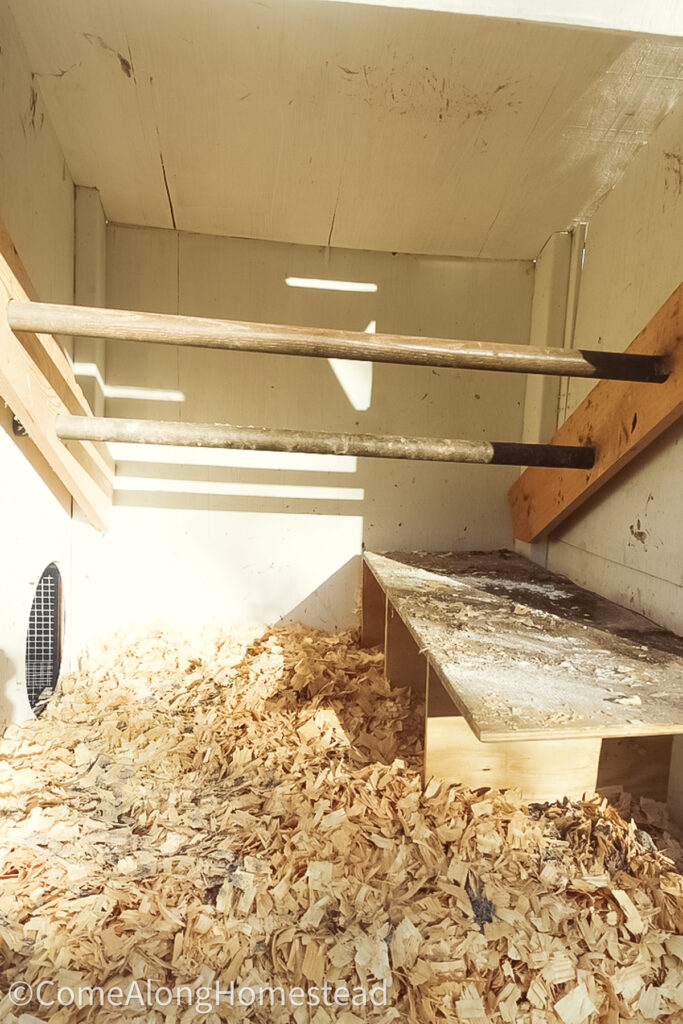
Chickens love to perch up high, so we added two roosting bars. The flock enjoys them and always settles in for the night. It’s a simple addition, but it makes a big difference in their comfort. - Automated Coop Door
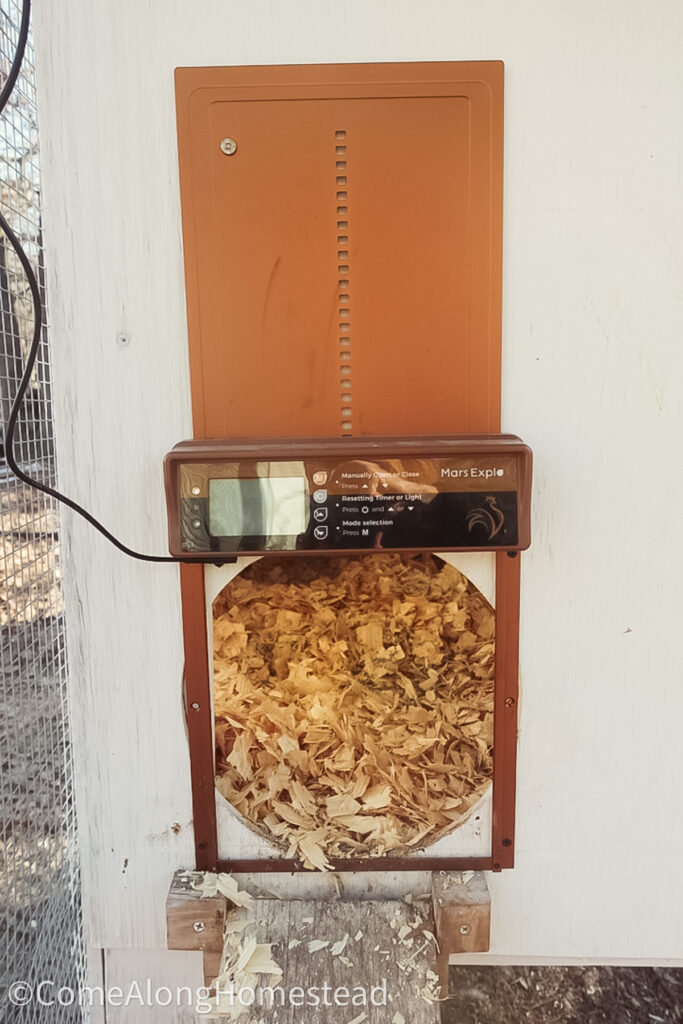
We installed a solar-powered coop door that opens and closes on a timer. This has been incredibly convenient! We no longer need to worry about opening or closing the door. Especially now that we are in the country. If you’re debating getting one, I highly recommend it. - Rope Handle for Mobility
The original design allows the coop to be dragged, helping the chickens explore fresh grass. However, the original way to pull it was tough to manage. To fix that, we added a long rope to the front, attaching it to the sides like a sled. It made pulling the coop easier, but it’s still a bit heavy. Ideally, the coop would benefit from hinging wheels to improve mobility if you are wanting it to function that way.
Tip: Chickens aren’t the smartest creatures. They have big personalities though and can be really sweet. But if you plan to move the coop, do it at night while they’re in it. When they wake up in a new spot, they’ll adjust and find their way back. But if you move it during the day when they aren’t in the coop or run, they’ll just stand around, confused and lost. Chickens are funny that way.
How Many Chickens Can It Hold?
In the city, we kept three hens in the coop. The run provided enough space, and we let them free-range most of the time. We had a cat and a fenced yard, which made this possible. But if you have a dog, don’t let them free-range unless the dog is well-trained. Dogs will kill chickens, so always be careful.
Since we now live on a one-acre property, we have five chickens—one rooster and four hens. The coop is spacious enough to comfortably house them, but the run would be too small for full-time use without being moved around the property. This is mainly because I love my chickens and I want them to have space to roam. The chickens free-range during the day, with the coop serving as their main base. It could comfortably accommodate up to eight chickens inside the coop. However, if the run remains stationary, it’s best suited for no more than six chickens. So, here are two options:
- If you plan to keep the coop stationary, I recommend a maximum of six chickens.
- If you’re planning to move the coop, I suggest having eight, maybe up to ten, chickens.
For a stationary setup with ten chickens, I’d recommend extending the run by about two or three feet to give them more space.
Final Thoughts
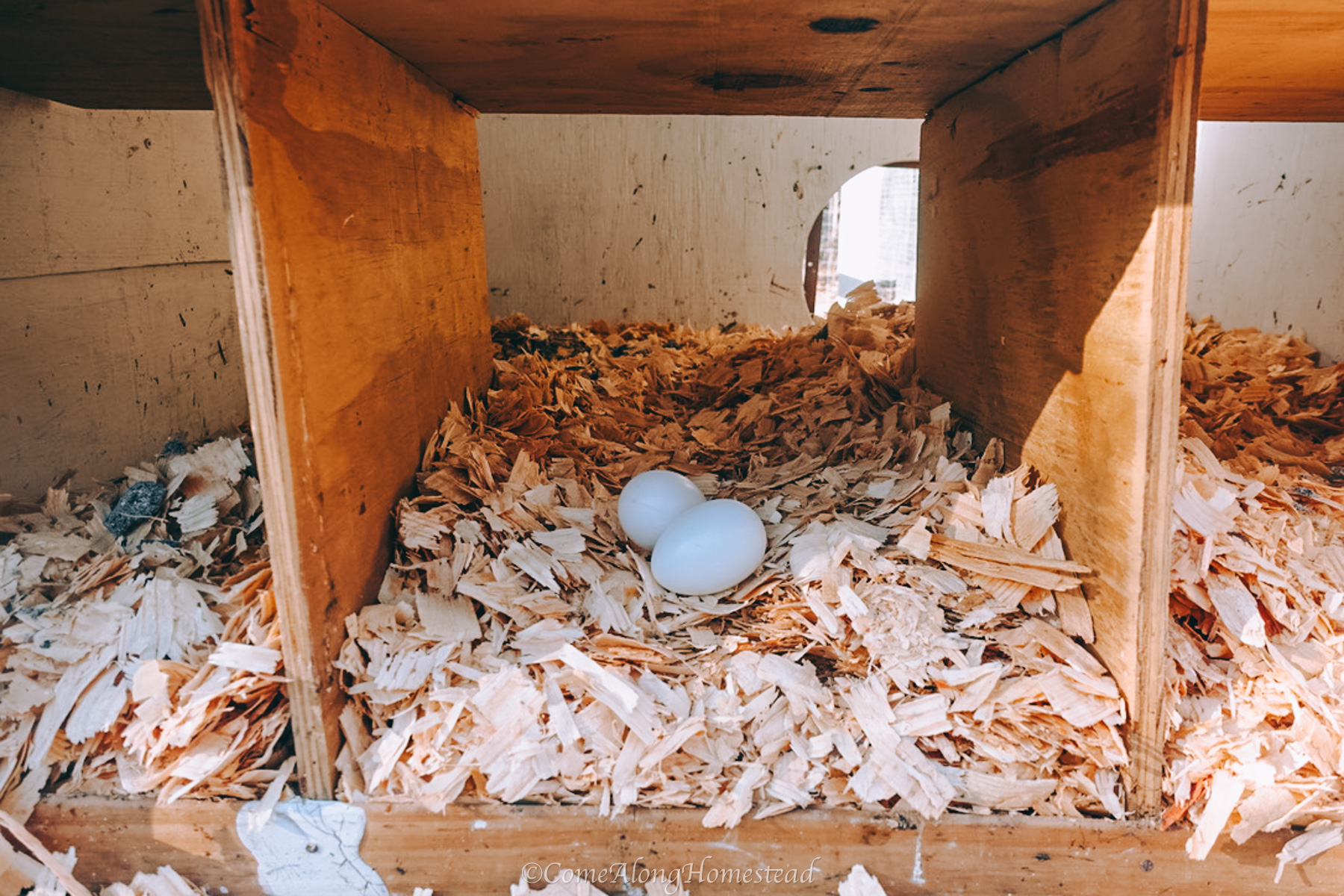
Overall, the coop design is solid. It has great airflow, easy access to the chickens, and is simple to clean. It’s been low maintenance for us, and we’re happy with the result.
Hope this helps! Feel free to ask if you have any other questions about the design or modifications. I’m happy to share more!